02
Almost Human
19 Nov 2026
When making gets fast, review gets slow
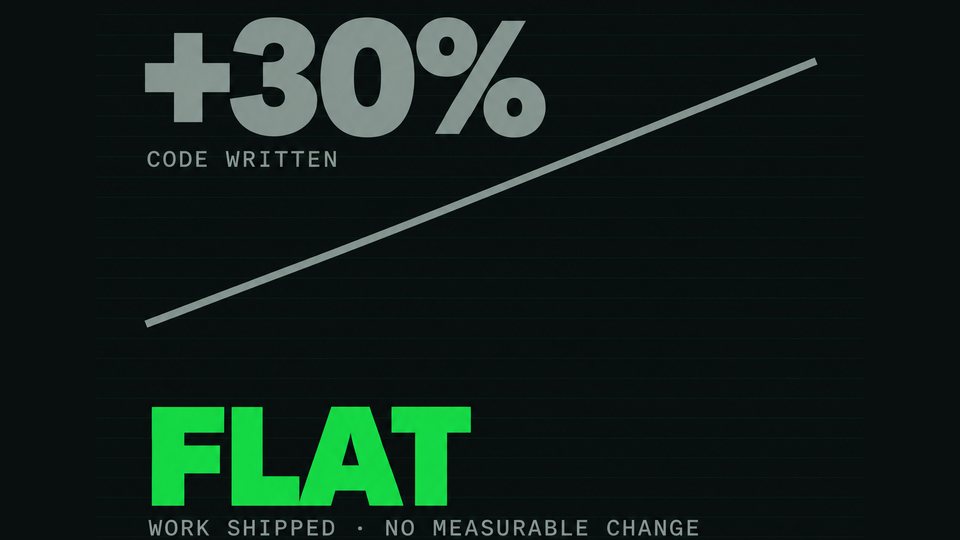
In the same study, code took 49% longer to get accepted. Why we build review into every job instead of bolting it on.
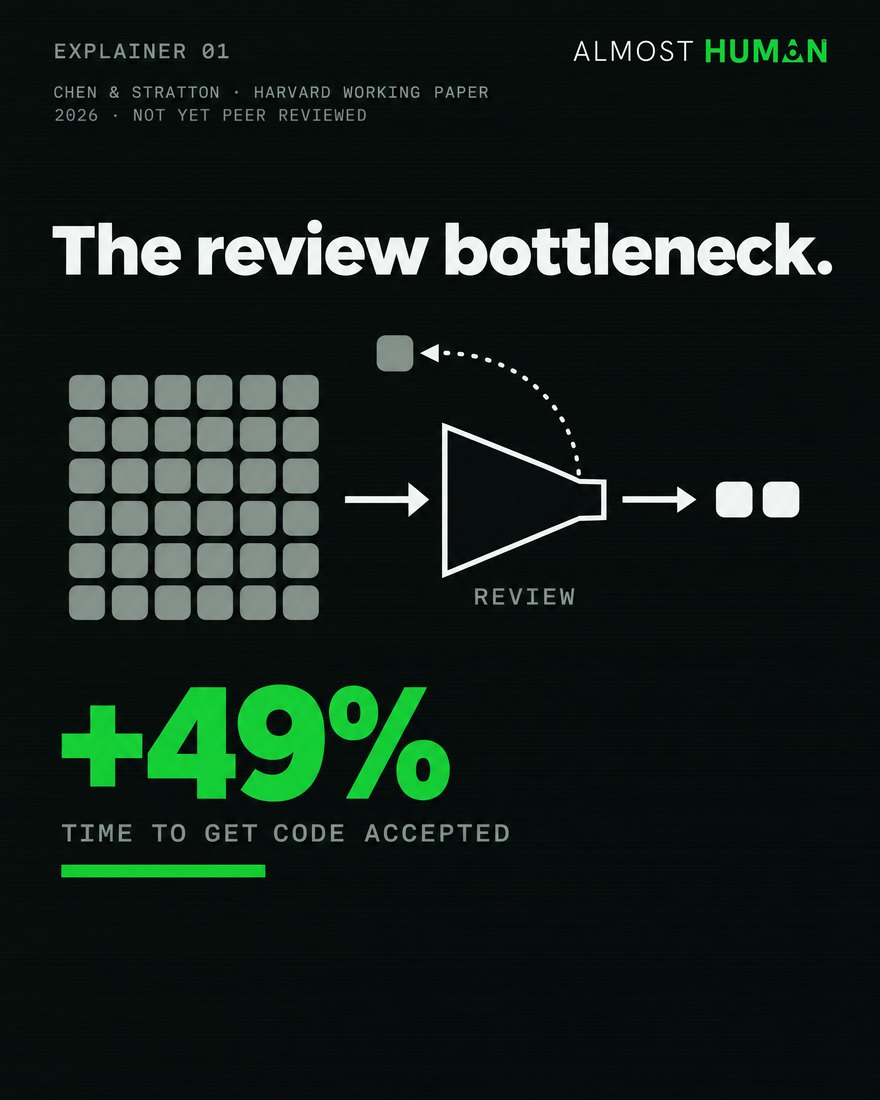
Image: Almost Human explainer card, made in the studio.
The Harvard study found where the extra code went. It piled up at review. The time to get a change accepted rose 49%, from about seven days to about ten and a half.
AI sped up the making. It didn't speed up the checking. People still had to read, question and approve every piece, and now there was more of it.
Production works the same way. AI can get a first cut on screen in hours. Then it sits in a review queue, waiting on notes from five people who each see it differently.
We plan for that instead of being surprised by it:
- Fewer, better options per round. Three strong directions get real feedback. Twelve get skimmed.
- Review rounds built into every job. Each round costs less, so we can go round again, and the schedule already allows for it.
- One crew, one pipeline. Notes go straight to the people making the change. Nothing waits on a vendor hand-off.
Fast making is only useful if the decisions keep up.
Source: Chen & Stratton, Harvard working paper (2026), not yet peer reviewed.